



Rynox Tornado Pro 4 Jacket Review: Is This India’s Best All-Weather Riding Jacket?
 Share

One jacket for the city, the highway and the odd off-road detour is a hard brief. Indian riders deal with 40°C afternoons, sudden monsoon downpours and nights that turn cold on mountain roads. This review looks at whether the Rynox Tornado Pro 4 is the right jacket for you. The answer depends on how you ride, so we cover the scenarios, the sizing, the protection rating, the care routine and the honest trade-offs.
Disclosure: RevvGearZ sells the Rynox Tornado Pro 4. At our last stock check every size was sold out, so use this guide for sizing and buying decisions, and check the live product page for availability.

RYNOX TORNADO PRO 4 JACKET - CE CERTIFIED CLASS A
₹9,850
Sold out at last check (S to 5XL)
View Product Details at RevvGearZ
Stock count taken 15 October 2026. Sizes and colours change, so check the live product page.
What the Tornado Pro 4 is, as listed
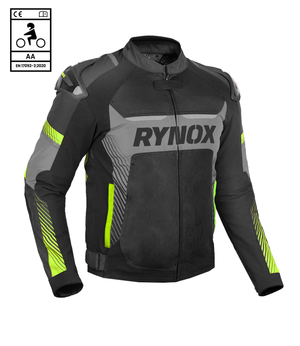
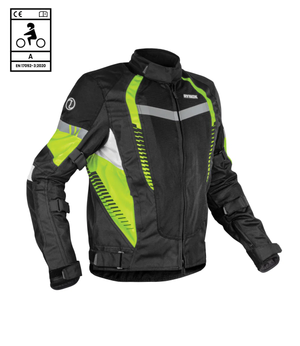
The listing describes the Tornado Pro 4 as the fourth generation of the Tornado Pro, rated Class A to CE standards and designed for city riding as well as longer adventure rides. Sizes run from S to 5XL, so plus sizes are covered, and the listing shows four colour options: Black, Orange, Red and Neon.
Real-world scenarios: how the jacket behaves on the road
City stop-and-go
In traffic at 40°C, a jacket is mostly a question of ventilation. Look for vents you can open at low speed and a liner you can remove. A jacket that is comfortable at 60 km/h can feel like a sauna in a jam, so the ability to open the front and sleeves matters as much as the armour.
Monsoon highway
Monsoon riding asks for a jacket that sheds spray and can take a steady downpour. Check the waterproofing details on the product page, and plan a separate rain layer for days when the forecast is heavy. A rain layer over a CE jacket keeps the armour in place and the outer shell dry, so you are not stripping off protection on the roadside.
Ladakh and Spiti
Cold nights and snow melt on high passes change the requirement. A shell jacket with a removable thermal liner, plus a base layer, gives more flexibility than one heavy coat. Wear the armour under the shell, keep the zips closed at altitude and pack a rain layer, because weather on these routes changes within an hour.
Trail and gravel
Off-road, the priorities shift to abrasion resistance and impact protection at the shoulders, elbows and back. CE armour is where most of the impact protection lives. For heavy trail use, many riders add a dedicated back protector and a pair of trail gloves, because a road jacket is not designed for sustained off-road falls.

Certification: what Class A CE means
Protection is the reason to spend on a proper riding jacket instead of a fashion piece. The listing states CE Class A. CE-rated jackets are tested to a recognised standard for impact and abrasion protection, and the armour is where most of that protection lives. A jacket without a rating gives you no way to know how it will hold up in a fall.
A rating describes the jacket as tested. It does not make a crash safe. Pair the jacket with a certified helmet, gloves, boots and pants, and ride within your ability. Check the label on the jacket, not just the product title, and confirm the armour details on the listing before ordering.
Sizing: measure before you order
Riding jackets are cut for a riding position, which is leaned forward with the arms out. A jacket that fits in a shop can feel tight on the bike, and a jacket that is too loose lets the armour move out of position in a fall.
- Measure your chest at the fullest point, with the tape level under the arms.
- Measure your waist at the natural narrowest point.
- Measure your arm length from the shoulder seam to the wrist with the arm slightly bent.
- Compare with the size chart on the product page. If you sit between sizes, choose the larger size for touring and the smaller one for city-only use.
- Try it on with a sweater or a thermal layer you would actually wear, and sit on a chair in the riding position to check the shoulders and back.
Buying guide: what to check before you order
- Certification. Confirm the armour specification and the CE label, and check that the protection level matches the riding you do.
- Sizing. Follow the measure-and-compare steps above, not just your usual size.
- Weather. If you ride heavy monsoon rain, plan a rain layer for very wet days.
- Ventilation. Look for vents you can open at speed and a layer you can run without the liner.
- Your riding. A commuting and touring jacket has different priorities from a trail jacket. Decide which one matters most.
Care and maintenance routine
Washing the outer shell
- Empty all pockets and remove the removable liner, if it has one.
- Brush off dust and grit outside, working from the top down.
- Hand-wash or use a gentle cycle with a mild detergent, following the care label. Keep the zips closed to protect the teeth and the fabric.
- Rinse well to remove soap, which can reduce the water repellency of the outer fabric.
- Air-dry in the shade on a hanger. Do not tumble-dry, and keep the jacket away from direct heat, which damages coatings and armour fixings.
- Re-proof the outer fabric with a wash-in or spray-on product made for technical textiles when water stops beading. Follow the product instructions and do not use household fabric softener.
Armour care
Riding armour is the part you cannot see failing. Whether your jacket uses removable CE armour or a sewn-in pocket, check it on the same routine:
- After a fall or hard impact, replace the armour. Most CE armour is designed for one major impact, and the damage is not always visible.
- Wash armour inserts only if the maker allows it. Many inserts should be wiped clean, not soaked.
- Check the pockets and fixings for tears, loose stitching and shifted inserts after each ride.
- Store flat or hung away from heat, so the armour does not warp in storage.
Waterproof liner and rain layer care
A waterproof membrane or liner needs the same gentle treatment as the outer fabric. Do not iron it, do not dry it near a heater, and dry it fully before storage. Mildew is the usual problem with a damp liner left in a bag. Air the jacket out after a wet tour, and keep it open rather than sealed in a hot box.
Comparison: Tornado Pro 4 vs Royal Enfield riding gear vs Alpinestars
We have not pulled spec sheets for the competitor jackets for this table, so the rows describe what to compare and where to check it. Verify current protection ratings, waterproof claims and prices on each maker's page.
| Factor | Rynox Tornado Pro 4 | Royal Enfield riding gear | Alpinestars |
|---|---|---|---|
| Certification | CE Class A (listing) | Check the specific model label | Check the specific model label |
| Size range | S to 5XL (listing) | Check model size chart | Check model size chart |
| Colours | Black, Orange, Red, Neon (listing) | Varies by model | Varies by model |
| Typical price tier | From ₹9,850 at RevvGearZ | Mid-range, varies by model | Premium tier, varies by model |
| Best for | One jacket for city and touring, CE protection at a sensible price | Riders who want the brand's own gear and dealer support | Riders who want premium protection and a dedicated range |
The honest read: for a single jacket that handles commuting and touring with CE protection, and a wide size range, the Tornado Pro 4 is a strong contender. For sustained heavy rain, very cold high passes or dedicated off-road use, check each option's waterproofing, insulation and back protection against your route before you commit.
Who should buy the Tornado Pro 4
- Riders who want CE-rated protection without moving to a premium price bracket
- Commuters and weekend tourers who ride in mixed weather
- Riders who need a size beyond standard ranges
Who should look elsewhere: riders who need full waterproof touring kit for weeks of rain, and riders who want a dedicated off-road jacket with heavy chest and back protection.
Be wary of anyone who gives one "best jacket" answer for every rider. The right jacket is the one that matches your route, your climate and your fit.
Frequently asked questions
Is it CE certified?
The listing states CE Class A. Confirm the armour details on the product page and the label on the jacket before you ride.
Is it good for Ladakh or long tours?
It suits mixed touring. For sustained heavy rain or very cold high passes, add a waterproof layer, a thermal liner and a base layer.
How should I size it?
Measure your chest, waist and arms, compare with the size chart and check the fit sitting in a riding position. If you sit between sizes, choose the larger one for touring.
Can I wash it in a washing machine?
Only if the care label allows it. Use a gentle cycle, keep the zips closed, remove the liner and air-dry in the shade. Do not tumble-dry.
Should I replace the armour after a crash?
Yes. Replace armour after a major impact, even if it looks undamaged, because internal damage is not always visible.
Is the jacket sold out?
Every size was sold out at our last stock check. Check the live product page for current stock and sizes.
More guides from RevvGearZ
Ride protected. View the Rynox Tornado Pro 4 Jacket at RevvGearZ for current sizes, or browse the full catalogue.